Profile
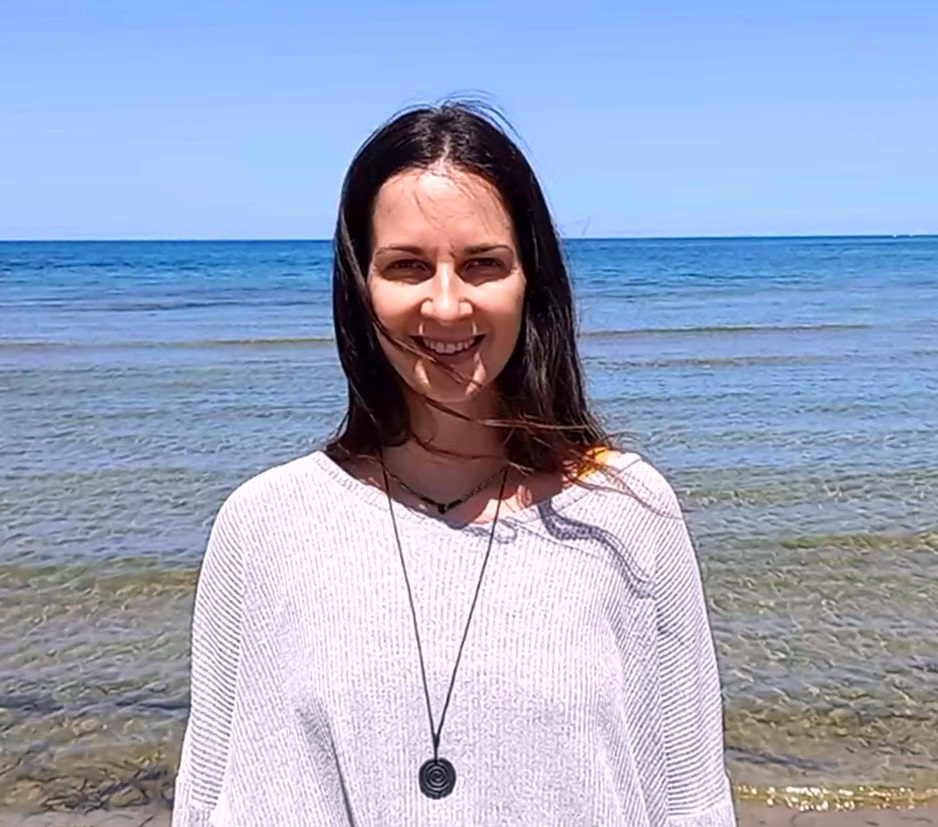
My primarily goal in research is the conservation of wildlife, especially in such a fast-changing world impacted by anthropogenic interference. The use of DNA approaches to study wild populations inspires me, as they can provide information that would otherwise be difficult to obtain. This information, ranging from the behaviour and structure to the health of a population, can significantly aid marine conservation efforts and ultimately the inference of management decisions. This is the biggest motive for my research and I am particularly fascinated by the world of marine mammals. Here in my PhD project at Hoffman’s lab, I will explore the interactions between Antarctic fur seals (Arctocephalus gazella) and their microbiome. By combining metabarcoding and omics-based approaches (e.g. metagenomics) together with a multifaceted dataset that includes information from population demography to host genetic diversity and fitness, this PhD will attempt to shed light on the intrinsic and extrinsic factors that can influence host-associated microbial communities in a wild vertebrate population that is declining due to climate change.
Previous Research and Other Interests
I have begun my journey in biological research studying the role of primary cilia on the Zebrafish (Danio rerio) and eukaryotic cells. Later on, after exploring further the world of conservation by volunteering for various NGOs working with Golden jackals (Canis aureus), dolphins and Mediterranean monk seals (Monachus monachus) I decided to pursue a career in ecology.
For my master’s thesis, I had the chance to work with an exceptional, multiyear dataset of a combination of DNA, life-history and environmental data for the Eleonora’s falcon (Falco eleonorae). In that project I studied how sex ratios fluctuated between years and seasons, as well as between different habitats. Surprisingly, the results showed that Eleonora’s falcons use an adaptive evolutionary strategy to produce the costlier sex (i.e. females) when food is abundant early in the season or in the first ranks of a brood and when picking the most protected nests of a colony.
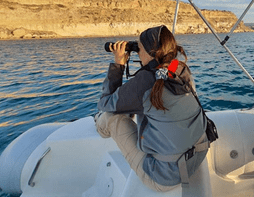
After my graduation, I worked as a marine ornithologist for the monitoring of seabirds in the Republic of Cyprus by using boat-based counts, while in the meantime I conducted a 4-month Erasmus+ internship at Glasgow University to learn how to use telemetry to study the movement behaviour of Herring gulls (Larus argentatus). I’m currently collaborating with the Natural History Museum of Crete and the Hellenic Centre for Marine Research to investigate the extra-pair copulations and the genetic monitoring of a well-studied colony of the Eleonora’s falcon in south Mediterranean.
In my free time you will find me petting dogs, playing music or beach volleyball, walking in the nature but most importantly… chasing the sea.
Supervisors
Prof. Dr. Joe Hoffman, University of Bielefeld
Prof. Dr. Michael Schloter, Technische Universität München, Germany
Curriculum Vitae
- 2023–Present: PhD student – University of Bielefeld
- 2022: Erasmus+ trainee – University of Glasgow
- 2021–2022: Marine Ornithologist – Environmental Research Services (ENVIR)
- 2020–2022: Lab technician & Research assistant – Hellenic Centre for Marine Research (HCMR)
- 2019–2021: MSc in Environmental Biology – University of Crete
- 2018–2019: Team supervisor – Archipelagos Institute of Marine Conservation
- 2017–2018: Erasmus+ trainee – University of Leiden
- 2012–2018: Integrated master in Biology – University of Ioannina
Publications
You can find a full list of Petroula’s publications here.
Contact Details
Department of Evolutionary Population Genetics
Center for Biotechnology (CeBiTec)
Faculty of Biology
Bielefeld University
33615 Bielefeld
Germany
e-mail: petroula.botsidou[at]uni-bielefeld.de
researchgate: Petroula Botsidou
twitter: @ecopetridish
 The Hoffman Lab